The School of Public Health at the Kwame Nkrumah University of Science and Technology (KNUST), Kumasi is leading an ongoing Community Entry and Diagnosis Programme (CEDP) for medical and dental students of the School of Medical Sciences (SMS) in the Asante Akyem North Municipality.
The programme, which runs from January 6 to 13, 2026, is being implemented with oversight from leadership, including Prof. Christian Agyare, Provost of the College of Health Sciences; Prof. Akwasi Antwi Kusi, Dean of the School of Medical Sciences; and Prof. Anthony Edusei, Chairman of the Organising Committee.
It is supervised on the field by the Dean of the School of Public Health, Prof. Peter Agyei-Baffour, alongside faculty members including Prof. Arti Singh, Head of the Department of Community Health; Dr. Joseph Kwasi Brenyah, Coordinator of Field Programmes, SMS-Community Health; and Dr. Thomas Peprah-Aggyekum, Deputy Coordinator of Field Programmes.
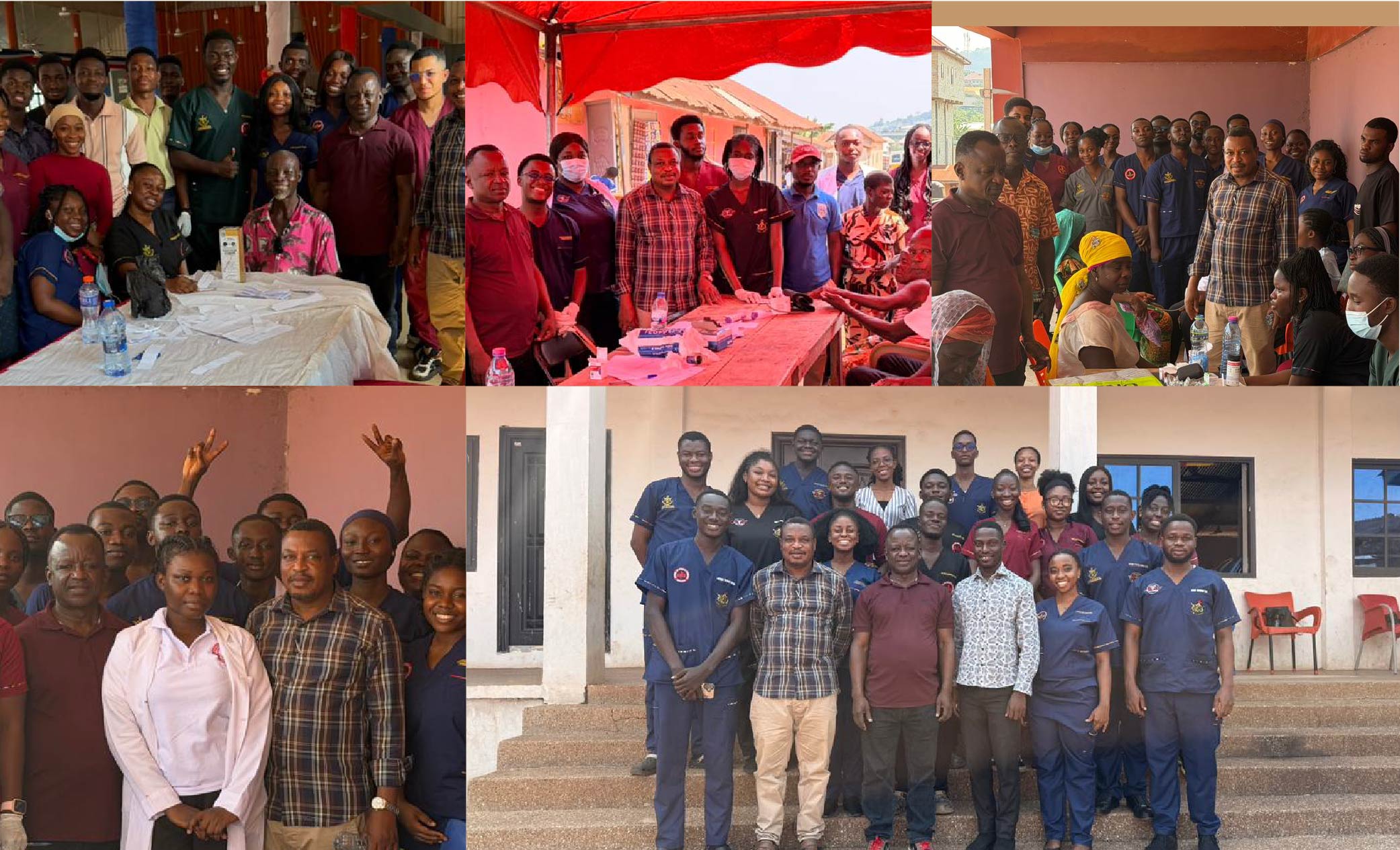
As part of the exercise, third- and fourth-year medical and dental students have been deployed to several communities across Agogo and its environs, where they are undertaking community entry activities, transect walks, household data collection and basic health screenings.
Communities currently participating in the programme include Hwidim, Sukumu, Gyidim, Bontoadiase, Free Town, Awayo, Apetenyinase, Betwe, Amantena, Woraponso, Nyinampɔnase, Akutuase, Wioso, Pekyerekye, Dome New Town, Dome Tweneboase, Juansa South, Juansa North, Ananekrom, Serebouso, Nhyiaso, and Dukusen-Afeseri.
The Community Entry and Diagnosis Programme is a core component of the fourth-year medical and dental curriculum and is conducted in line with recommendations of the Medical and Dental Council. It is jointly sponsored by KNUST and the National Health Insurance Authority (NHIA) under a memorandum of understanding spanning 2022 to 2027.
The programme was initiated in 2022 by Prof. Daniel Ansong, the immediate past Dean of the School of Medical Sciences, as part of efforts to strengthen community-based medical education and link clinical training to population health needs.
Over the past three years, more than 9,000 residents in 22 communities within the municipality have been screened through the programme for conditions including hypertension, diabetes, kidney diseases, cardiovascular disorders, dermatological conditions and injuries.
The initiative is designed to help students understand how health conditions seen in clinical settings originate within communities, while equipping them with practical skills in basic screening, data collection, research analysis and community engagement.
Students are being accommodated at the Agogo Nurses Training College hostel and are working with host institutions including the Agogo Municipal Health Directorate, the Agogo Divisional Police and traditional authorities.
Students are being accommodated at the Agogo Nurses Training College hostel and are working with host institutions including the Agogo Municipal Health Directorate, the Agogo Divisional Police and traditional authorities.


